Product successfully added to your shopping cart

Preserved Eggs
Century Eggs: Unveiling the Art and Science of the "Hundred-Year Egg"
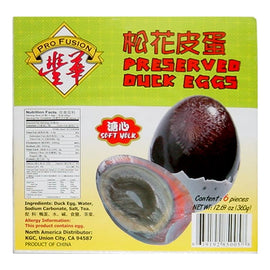
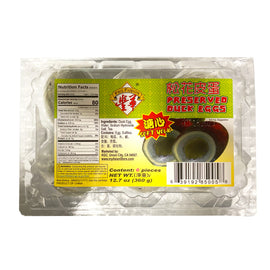
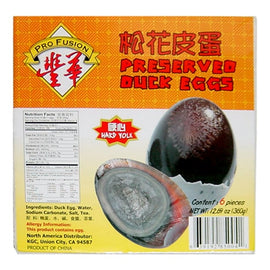
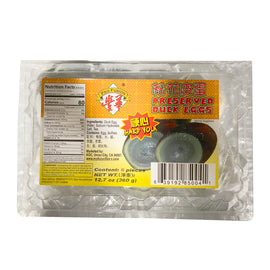
Century eggs (皮蛋, pídàn), also known as preserved eggs, hundred-year eggs, or thousand-year eggs, are a Chinese culinary delicacy known for their striking appearance and complex flavor. Despite the name, they are not centuries old but are preserved for weeks or months through a unique chemical process that transforms them entirely.
What Are Century Eggs?
The result is an egg with:
-
Egg White: Turns into a translucent, dark brown, firm gelatin with a salty, mineral flavor.
-
Yolk: Becomes a creamy, dark green to grey semi-solid with a strong, savory, umami-rich taste and a pungent aroma reminiscent of sharp cheese or ammonia.
-
Shell: Coated in a clay-like mixture during processing.
The Science Behind the Transformation
The preservation is not achieved by aging but by chemical curing. The key is creating a highly alkaline environment (pH 9–12) that breaks down the egg's proteins and fats, reorganizing them into new compounds. This process, called alkaline fermentation, causes:
-
Denaturation & Gelation: Proteins unwind and re-bond, giving the white its jelly-like texture.
-
Maillard Reaction: The high pH accelerates browning reactions between proteins and sugars, creating the dark color and complex flavors.
-
Chemical Changes: The alkalinity converts some fatty acids into compounds that contribute to the signature aroma and flavor.
Traditional vs. Modern Methods
1. Traditional Clay-Husk Method (Artisanal)
This is the oldest method, mimicking how century eggs were likely discovered centuries ago in ash from cooking fires.
Ingredients:
-
Fresh duck, chicken, or quail eggs
-
Wood Ash (from burned oak, pine, etc.)
-
Calcium Oxide (Quicklime)
-
Salt
-
Black Tea (brewed strong, for tannins and flavor)
-
Rice Hulls or Chaff (for coating)
Process:
-
Make the Paste: Combine wood ash, quicklime, salt, and cooled black tea to form a thick, mud-like paste.
-
Coat the Eggs: Gently roll each clean, uncracked egg in the paste until fully covered.
-
Apply Husk: Roll the paste-coated egg in dry rice hulls to prevent them from sticking together.
-
Cure: Place the eggs in a sealed clay jar or plastic container. Store in a cool, dark place for 6 to 8 weeks.
-
Check & Air: After curing, scrape off the coating. The eggs are ready to eat. They must then be aired for several hours to allow any residual ammonia smell to dissipate.
⚠️ Safety Note: Handling calcium oxide (quicklime) requires extreme caution (gloves, goggles), as it reacts violently with water and can cause severe chemical burns. This method is not recommended for beginners.
2. Modern Salt-Alkali Solution Method (Home-Cook Friendly)
This is a safer, more controlled, and increasingly popular method.
Ingredients:
-
Fresh eggs (duck eggs are preferred for larger yolks)
-
Food-Grade Sodium Hydroxide (Lye) or Sodium Carbonate (Soda Ash) - Creates the essential alkaline environment.
-
Salt
-
Black Tea
-
Spices (optional): Star anise, Sichuan pepper, cinnamon
Process:
-
Prepare the Solution: Brew strong black tea with spices. Let it cool completely. In a heat-resistant, non-reactive container (glass or food-grade plastic), carefully dissolve the salt and sodium hydroxide/sodium carbonate into the cooled tea. Always add lye to liquid, never the reverse.
-
Submerge the Eggs: Gently place clean, uncracked eggs into the solution. Ensure they are fully submerged. Use a weight if necessary.
-
Cure: Seal the container. Store at stable room temperature (20-25°C / 68-77°F) for 10 to 14 days.
-
Remove & Age: Carefully remove the eggs and rinse them. At this point, the white will be gelatinous but the flavor is not fully developed. Wrap each egg in plastic wrap and let them age in the refrigerator for an additional 2-3 weeks to mellow the flavor and develop the yolk's creamy texture.
Critical Safety & Selection Tips
-
Ingredient Purity: Use only food-grade alkaline compounds. Industrial grades contain heavy metal impurities.
-
Egg Quality: Only use the freshest, highest-quality eggs without cracks. Wash and dry them thoroughly.
-
Container Material: Use glass or food-grade plastic. Alkaline solutions can corrode metals.
-
Ventilation: When opening the curing container, do so in a well-ventilated area to avoid inhaling ammonia fumes.
-
Testing Doneness: After the curing period, open one egg. The white should be firm, amber-brown, and gelatinous. The yolk should be set but creamy in the center. If the yolk is still runny or the white is too soft, re-wrap and age longer.
How to Eat Century Eggs
Century eggs are always eaten cooked or cured, never raw from the process. The curing "cooks" them chemically.
-
Appetizer: Simply peeled, sliced, and served with pickled ginger.
-
Congee Classic: Diced and added to rice porridge (century egg and pork congee).
-
Cold Tofu: Topped on silken tofu with soy sauce, sesame oil, and bonito flakes.
-
"Old & Fresh" Salad (涼拌皮蛋): Mixed with cubes of fresh tofu, chili oil, vinegar, and cilantro.
Troubleshooting Common Issues
| Problem | Cause | Solution |
|---|---|---|
| Yolk is too runny/hard | Curing time too short/long; alkaline strength off. | Adjust time/alkali concentration next batch. Hard yolks can still be used. |
| White is too soft/mushy | Eggs not fresh; curing time too short. | Use only very fresh eggs. Extend curing time. |
| Overwhelming ammonia smell | Insufficient airing after curing; cure too long. | Peel and air slices for 15-30 mins before eating. |
| White has "snowflake" patterns | This is normal and desired! Called 松花 (sōnghuā), these pine-branch patterns are crystals formed from amino acids and magnesium, signifying a well-made egg. | Enjoy—it's a mark of quality. |
Conclusion
Making century eggs at home is a fascinating foray into food chemistry and traditional preservation. While the traditional clay method is labor-intensive and hazardous, the modern solution method offers a safer, more accessible path for curious cooks. The process requires precision and patience, but the reward is a uniquely flavorful ingredient that has captivated palates for generations. Always prioritize safety when working with alkaline materials, and start with small batches to perfect your technique.